What role does continuity within a brand’s design play in this context?
Continuity must not become repetition. After one or two product generations, people expect something new. Furthermore, the global landscape is changing due to Chinese manufacturers who are building brands at an enormous pace without decades of history.
How do you view the market in China?
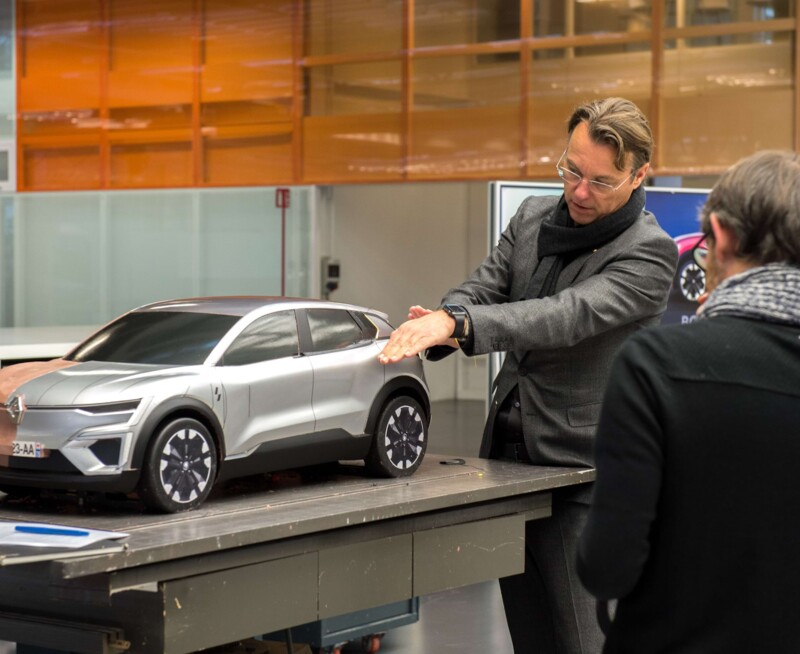
I see the danger that the car will degenerate into a mere commodity – a product without its own personality or soul. At the same time, we are learning from the pace of development there: we developed the new Twingo together with an engineering partner in China in just twenty-one months; in Europe, that would have taken over three years. The world needs affordable electric cars for the masses.
The role of artificial intelligence is currently the subject of intense and wide-ranging debate. What role does it actually play in your design process?
For me, AI is, above all, just another tool in the creative process. What matters is not how an idea comes about, but whether it is a good one. A strong idea can come from a sketch, from Photoshop, from a conversation or with the help of AI. In the end, it’s the quality of the idea that counts – not the tool used to create it.
And what advice would you give today to a young person who wants to become an automotive designer?
In the past, the field was divided into exterior, interior, and colours and materials. Today, a vehicle brings together disciplines ranging from sound design to user experience design. The real art lies in finding the balance between design aspirations and engineering realities.
Final question: What does good style mean to you?
Style is the result of all one’s personal experiences and influences. A car shows what you want to be. Your own home reveals who you really are.
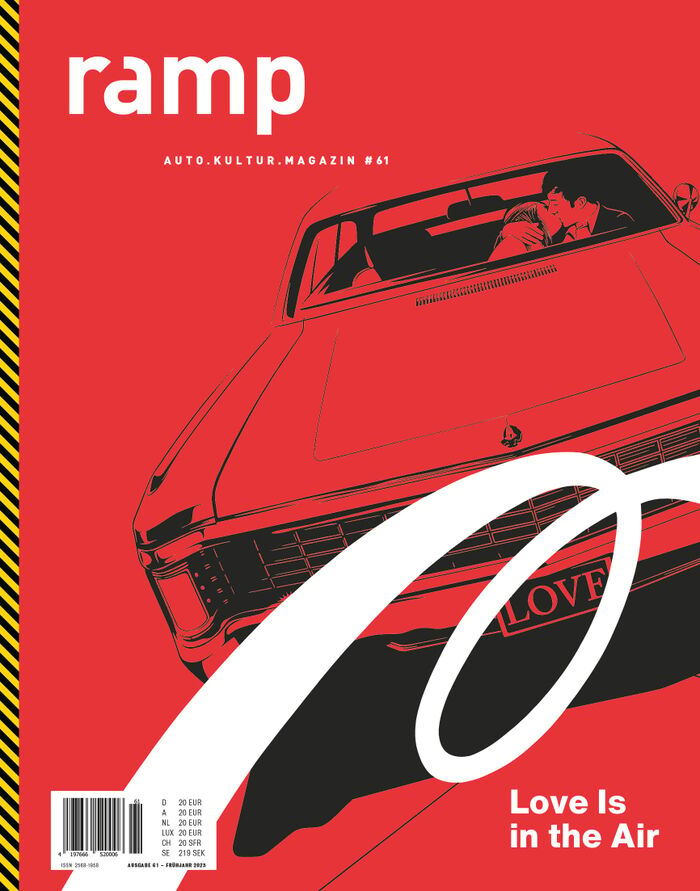
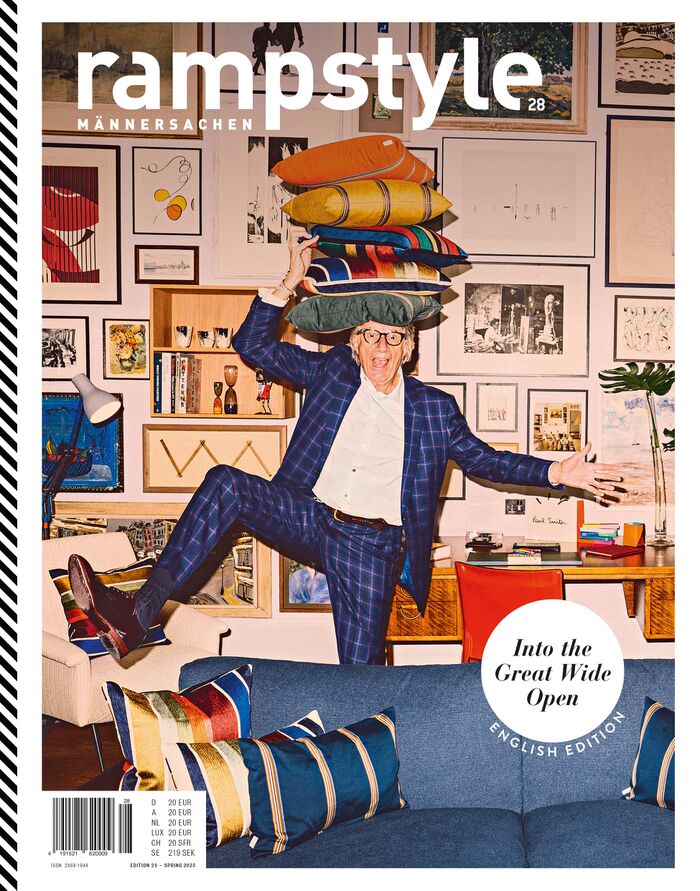
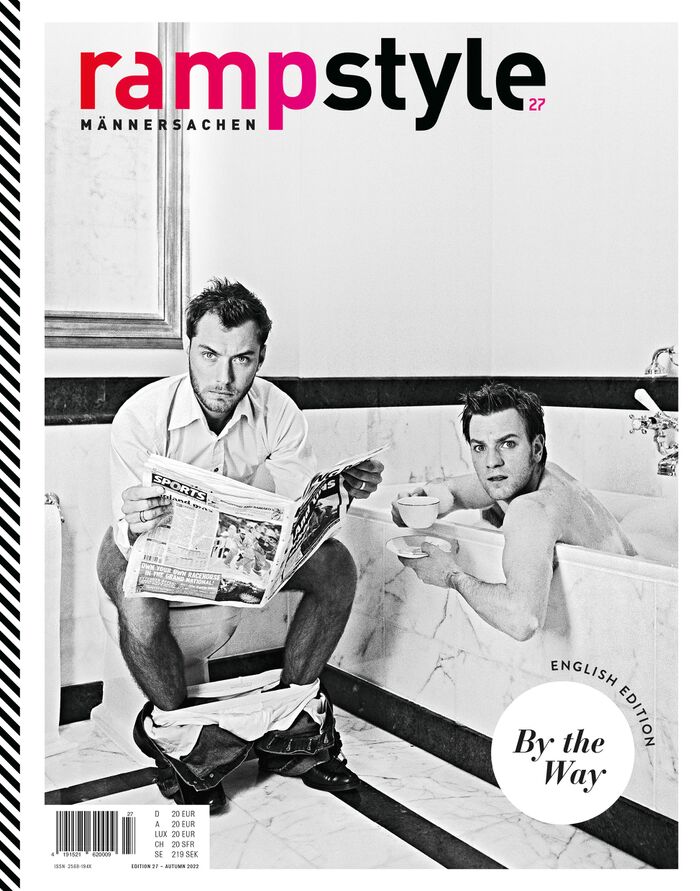
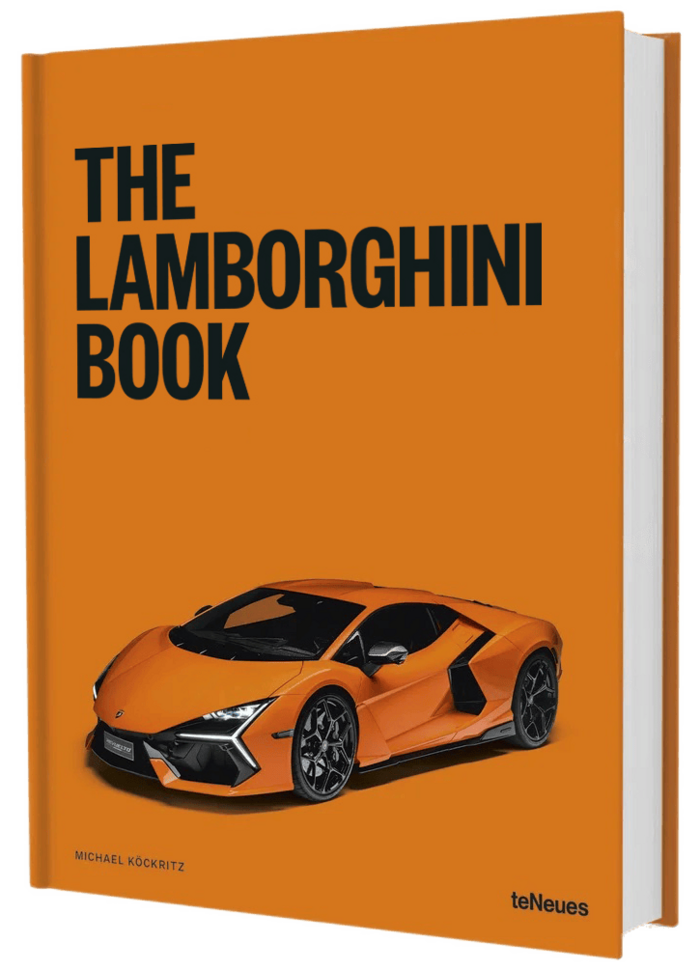
Read more on this in the latest issue of ramp #71 ‘Jabba Jabba Doo!’ and the in-depth interview with Fabrice Cambolive, CEO of the brand and Chief Growth Officer of the Renault Group.