The background to the question: In the automotive industry, we are currently seeing more and more the role of a Chief Creative Officer who oversees everything. Would you like to have more control over these areas?
Designers tend to be obsessive; we actually always want to be in control of everything. But from a functional point of view, the way things are at the moment works very well, precisely because of the diversity of the results. We thrive more in creative chaos than under a single visionary authority. If we were all locked into a single direction, we might be more efficient, but less interesting.
How much weight does your brand’s history carry for the models of today and tomorrow? Or to put it another way: how much heritage does your brand need for its future?
With a heritage brand like Royal Enfield, history is always present; for our customers, it’s a guarantee that we are here, have always been here, and will remain here. That doesn’t mean we always do the same thing – we continue to evolve, but cautiously, so that everything stays within the family.
What should someone feel when they see a new Royal Enfield model for the first time?
Ideally, desire – that’s the aim of every product: you stand in front of it and think, ‘I want that.’ With motorbikes, so much is based on a passion that’s actually illogical; you don’t need it, you want it. After that, you should get the feeling of a solid, high-quality product that will be with you for a very long time.
You made use of the custom scene early on as a sort of trend laboratory, even before you joined Royal Enfield. What does a brand learn from people who take its products apart and reassemble them?
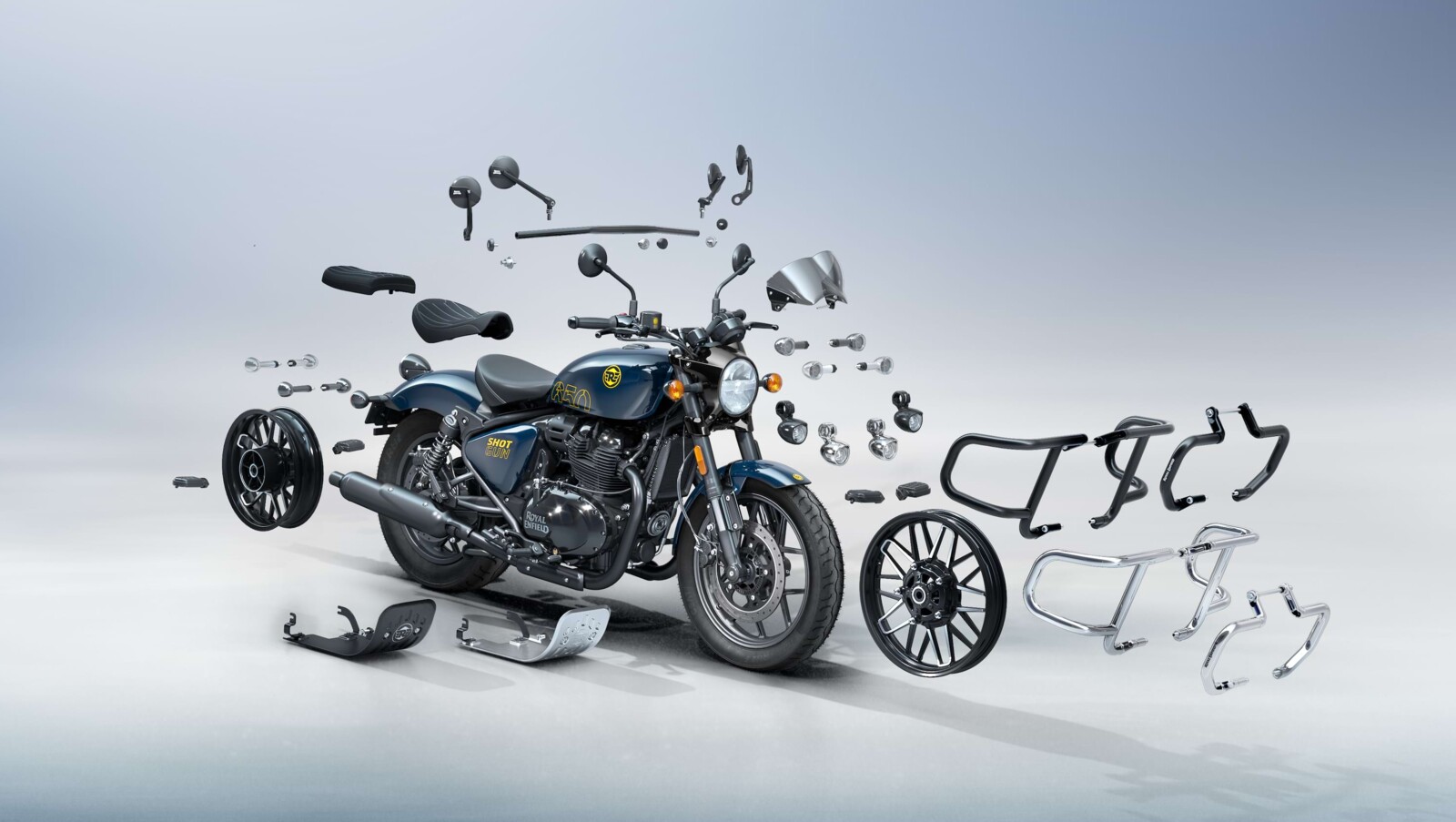
When we develop a motorbike, we have a vision of what the product should be. Customisers, on the other hand, give us an idea of what it could become. If you see lots of people making the same modification – the same exhaust, the same seat height – it shows just how firmly established that desire is, and that feeds into production decisions and our range of accessories. The second aspect is the sheer creativity of professional customisers: they create one-off pieces. This is hugely inspiring for us in design because it isn’t just theoretical. As they don’t have to worry about mass production, they can operate with a freedom that we don’t have. For us in the design department, this is hugely inspiring; you see something and think: ‘Of course, we can’t adopt this exactly as it is, but how could we incorporate some of it into our production models?’