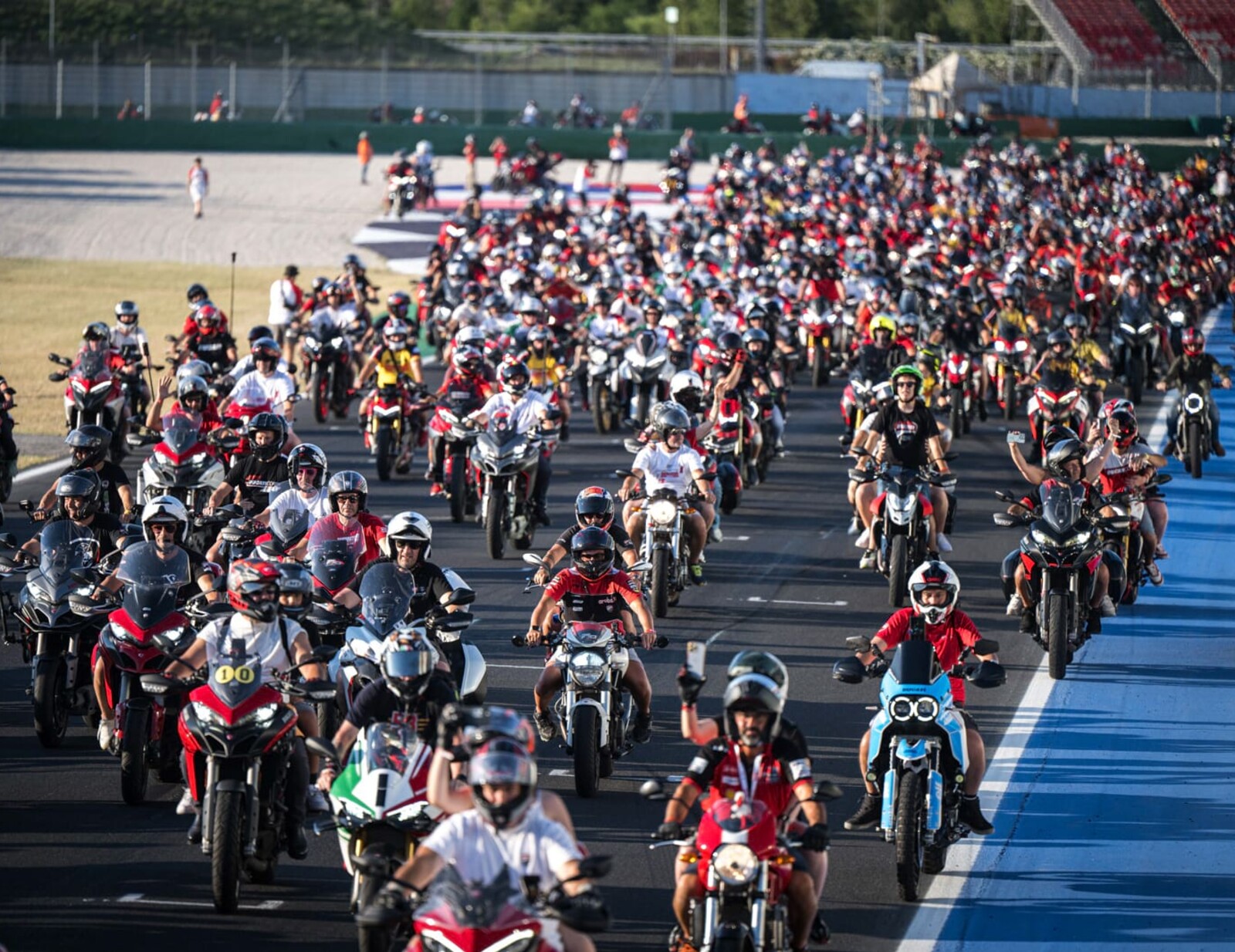
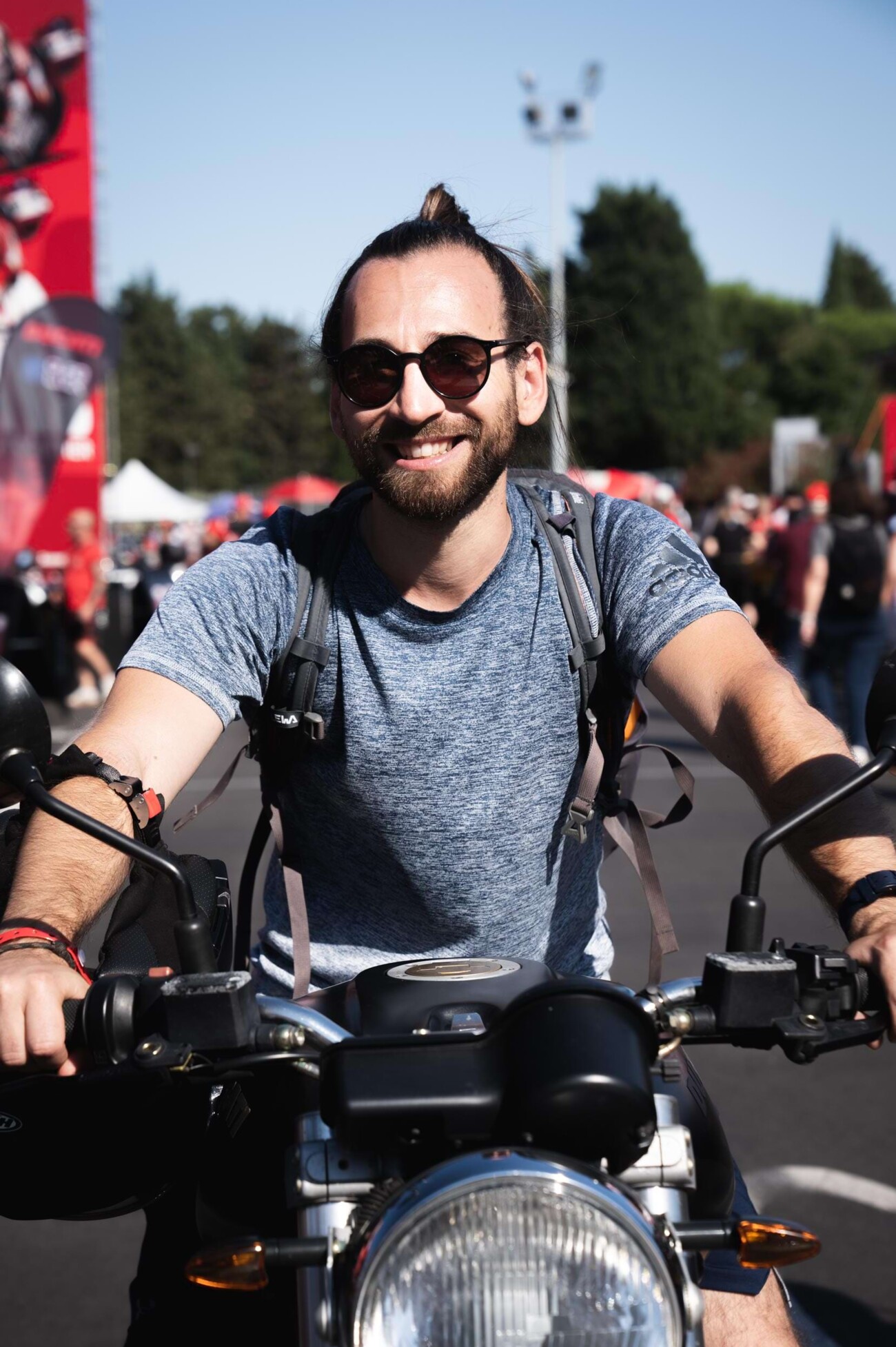
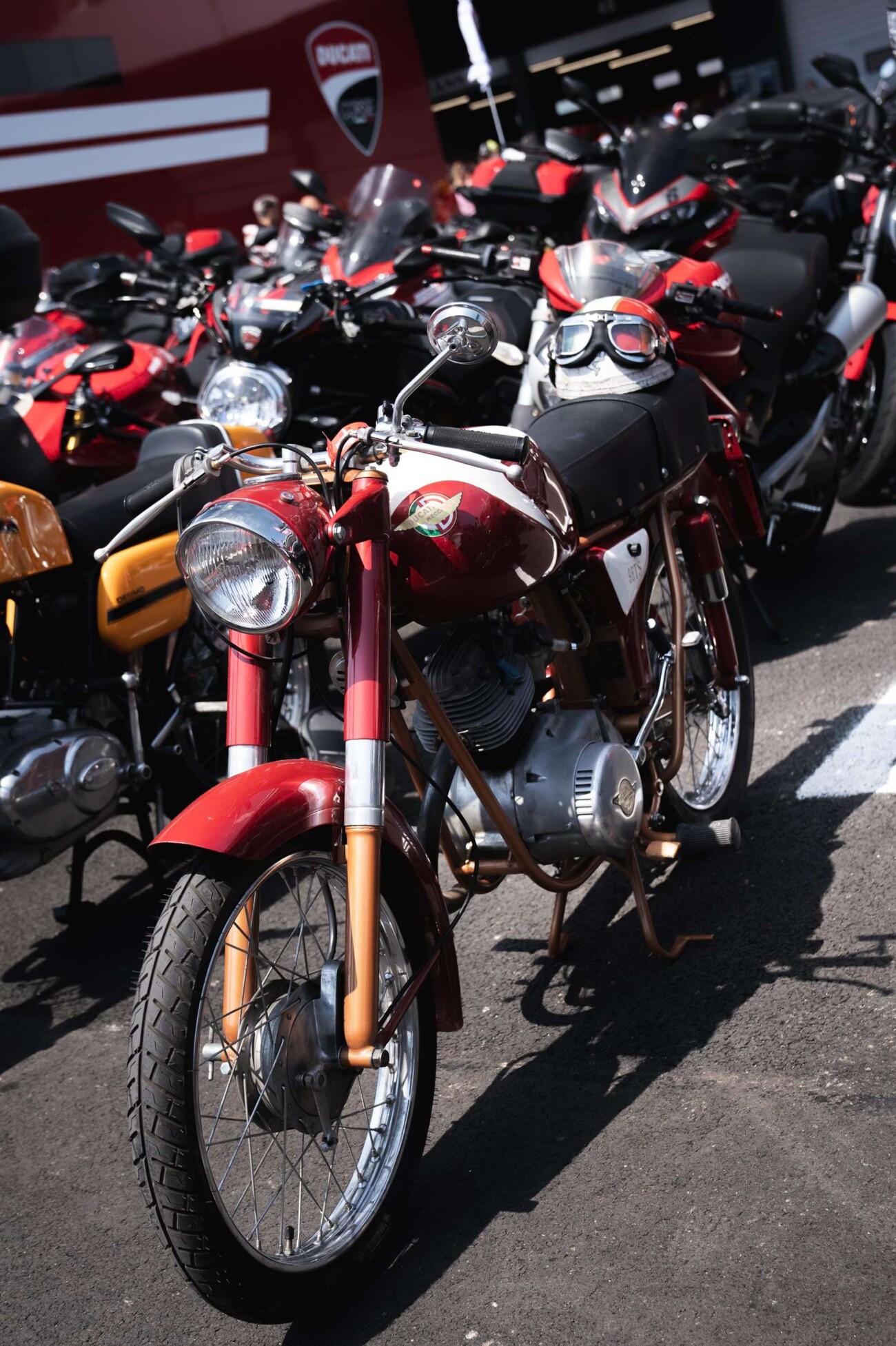
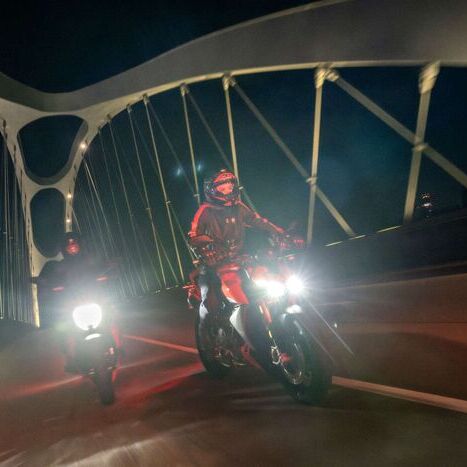
In her research project ‘Zeitgeschichte sehen’ (Seeing Contemporary History), media studies scholar Sabine Möller has demonstrated just how much our understanding of the past has changed: away from the idea of an objectively fixed history, towards the realisation that history is always an ‘interactive process of appropriation’. History, adds historian Jörn Rüsen, is not the reception of something predetermined, but a ‘construction of the present’ – something that every generation actively recreates, rather than merely observing. According to this logic, a museum piece that one merely looks at remains dead: fixed, explained, concluded. A motorbike, on the other hand, which carries its owner to their own exhibition, defies precisely this fixation.
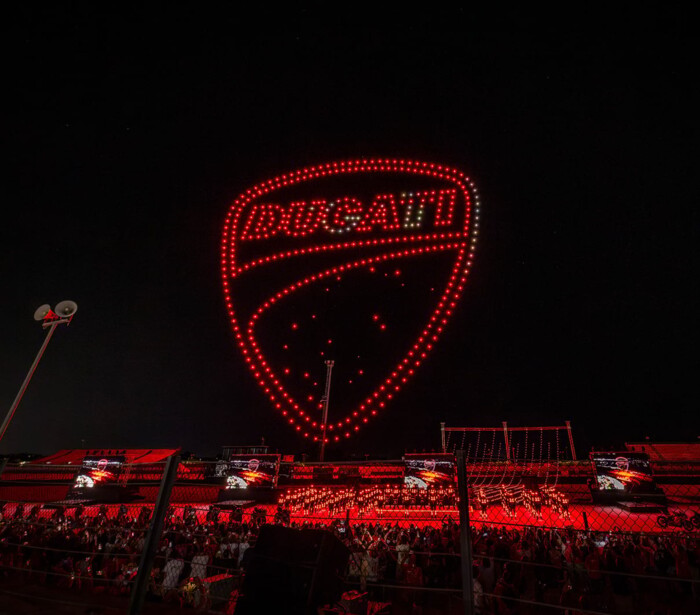
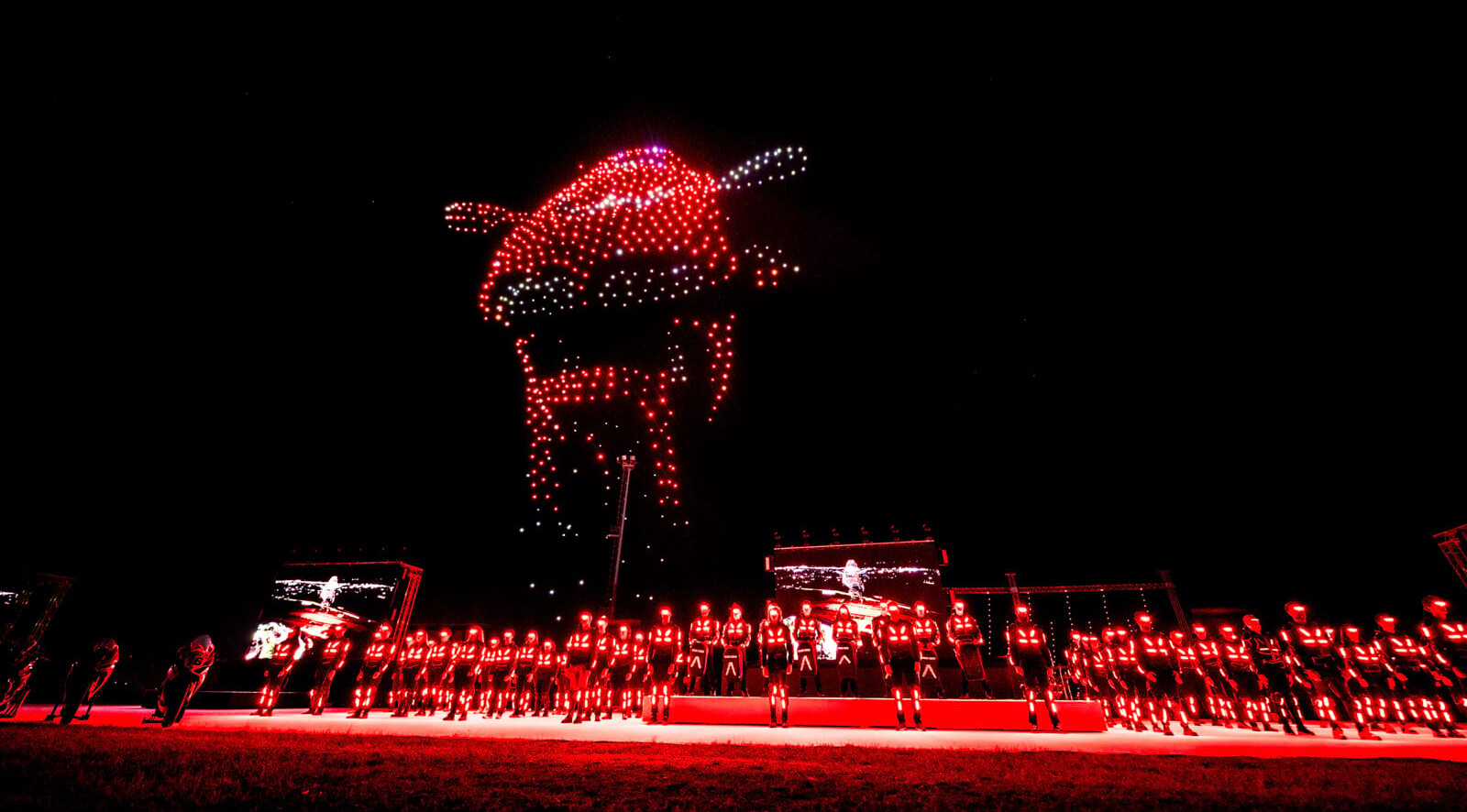
This is precisely the point of the juxtaposition between Heritage Village and the augmented reality experience, which found a second, even more fleeting canvas in Saturday evening’s drone and fireworks display. There, hundreds of drones traced iconic images from a hundred years of Ducati history into the night. A rear-view mirror of light that had already dissolved again mere seconds later. This, too, is the appropriation of history in Möller’s sense: not the permanent preservation of an image, but its fleeting, collectively shared realisation. At the same time, the event also set new standards in the digital realm: more than two million page views, more than 20 million social media impressions, 700,000 viewers for the live stream of the Lenovo Race of Champions, and 220,000 FantaWDW sessions on the official Ducati WebApp. You could also look at it this way: an anniversary that merely looks back would betray its own legacy.