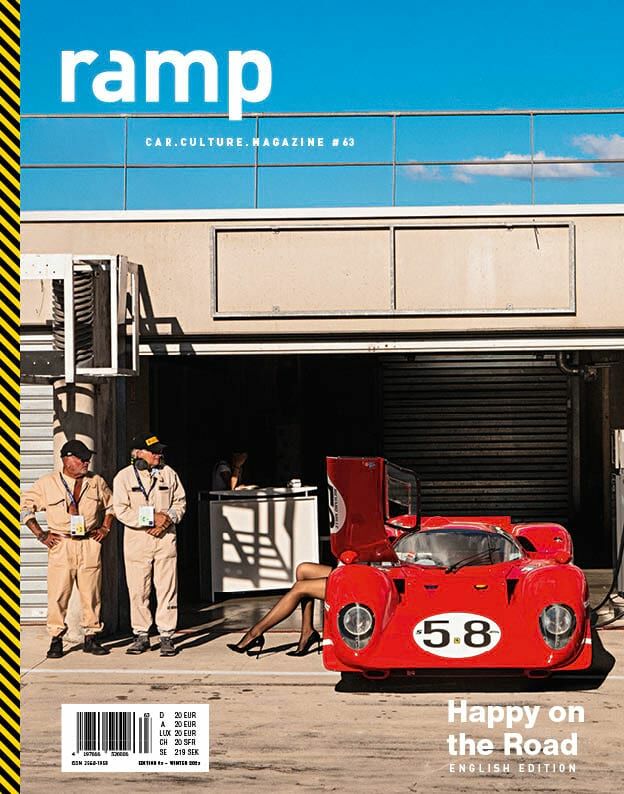
The originally closed vehicle was converted into an open two-seater. The engine and cylinder head were modified, increasing the displacement to 650 cubic centimetres. He was so impressed with the result – Lamborghini called the little racer the "Testa d'Oro" – that he had the Topolino included in the list of participants in the 1948 Mille Miglia. The Lamborghini/Baglioni team's Fiat number 427 bounced from bend to bend until it finally went off the road and had to give up. Lamborghini had to retire, and in retrospect it will be remembered above all for the first victory of another car ... the Ferrari Coupé 166 from Biondetti.
Ferruccio Lamborghini knew what Italy needed in those years, and his common sense advised him to enter the agricultural machinery business. In 1952, he produced the first tractors bearing his name. After just a few years, he was the third-largest Italian manufacturer in this sector behind Fiat and Ferguson. The reputation of his company was based on the particularly careful production of the machines. The crankshafts were ground and balanced, and the pistons came from Eaton Livia, which also supplied Maserati. Lamborghini gradually expanded its production programme. In 1960, he founded the company "Lamborghini Bruciatori" in a suburb of Pieve di Cento, which manufactured heating and later air conditioning systems. Around fifteen tractors and one hundred radiators left the Lamborghini factories every day. He was convinced that there must still be a gap in the market for a manufacturer that had "something different" to offer than Ferrari or Maserati. A car with a more original design and more avant-garde mechanics.