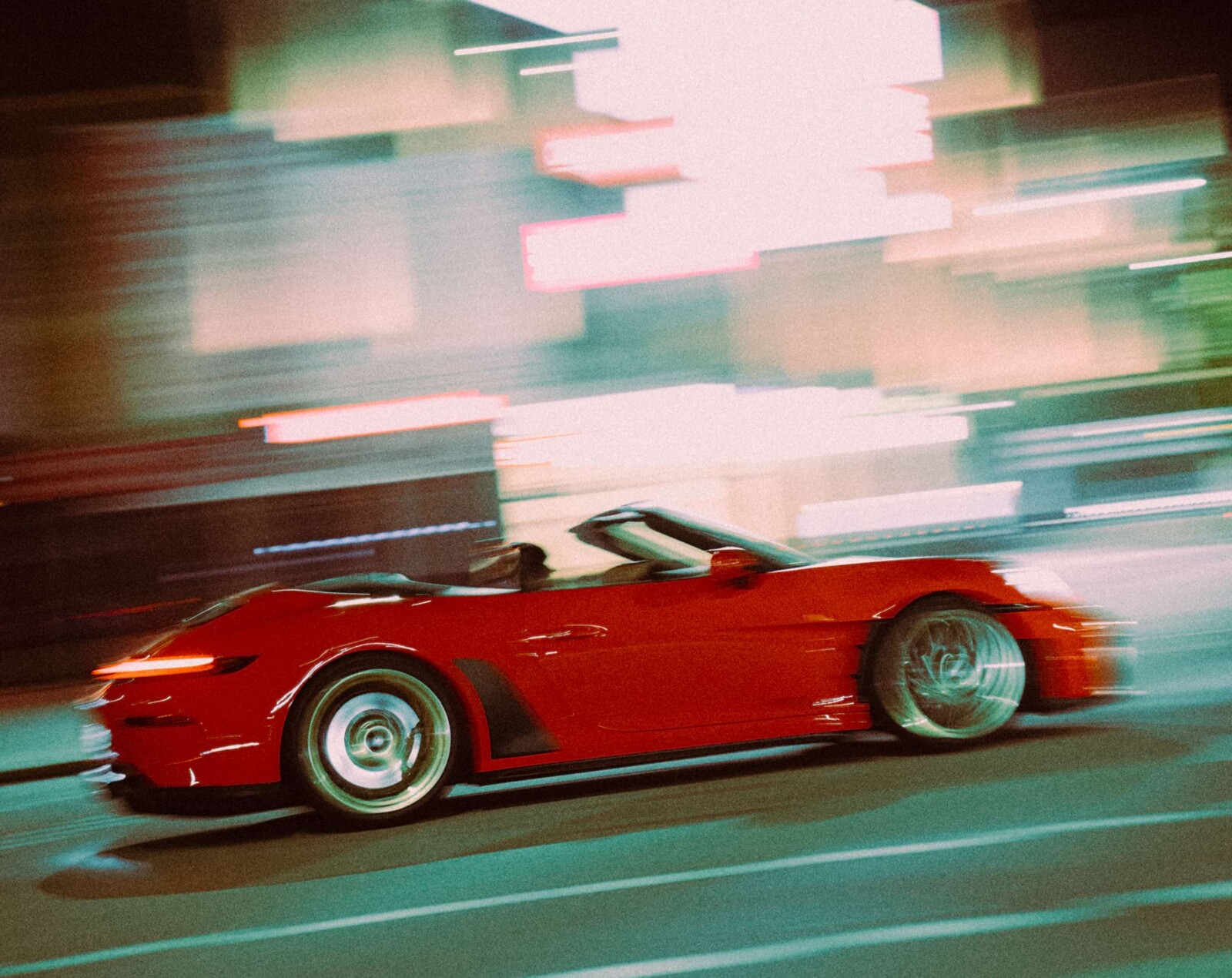
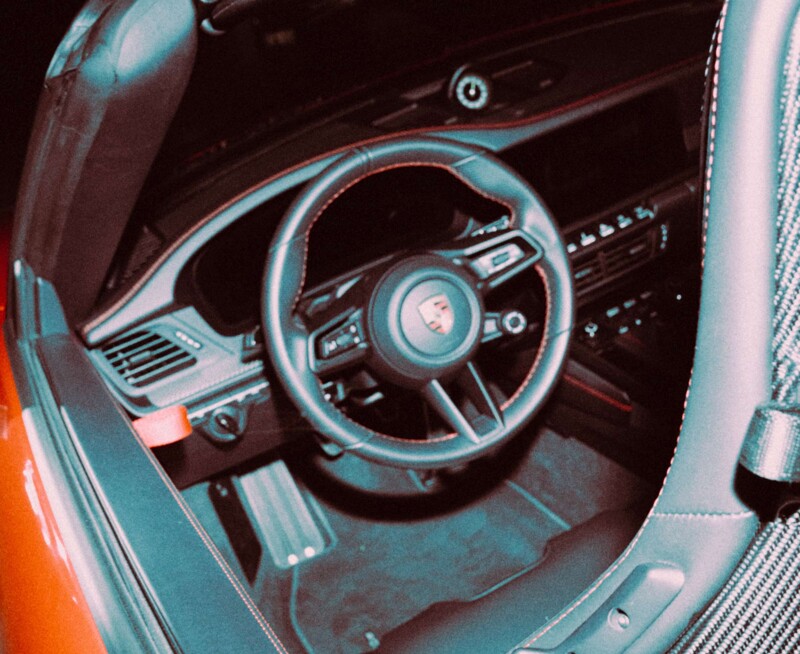
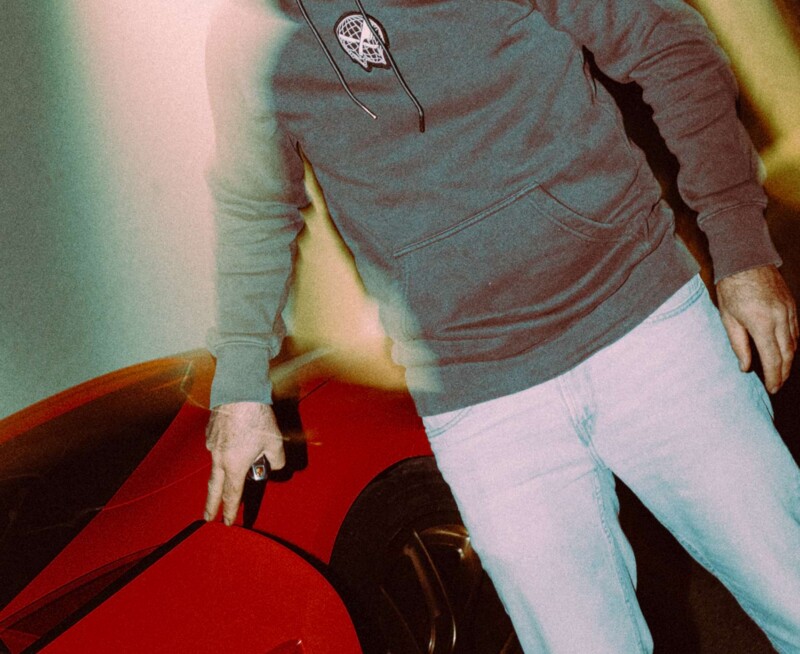
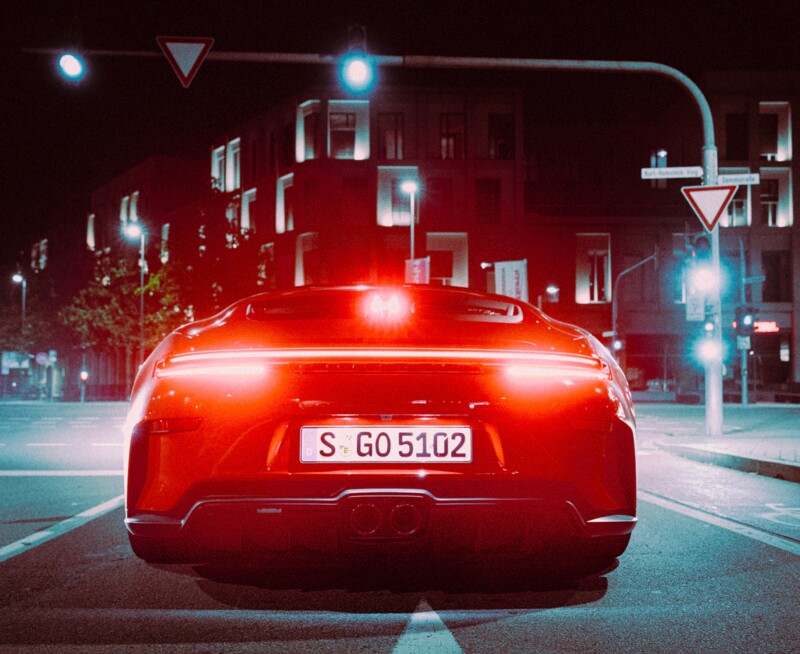
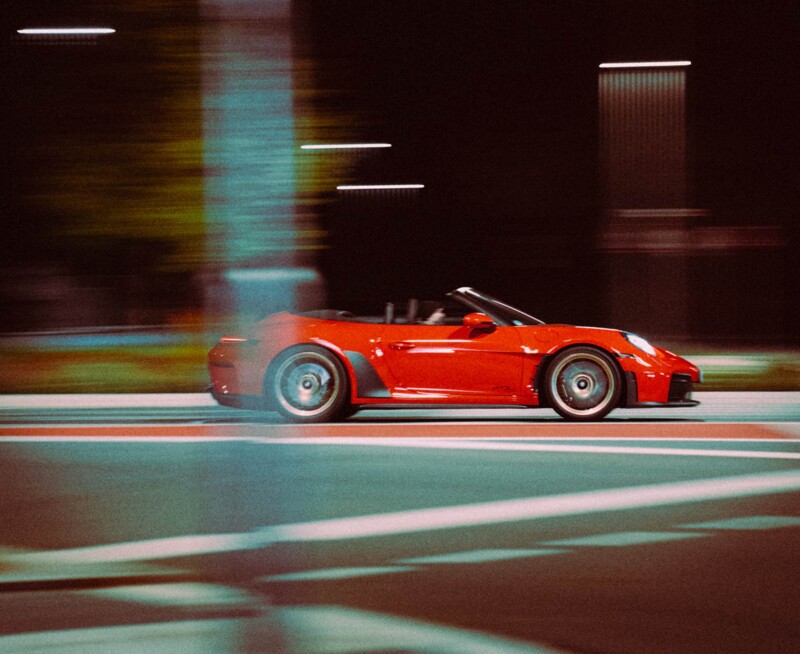
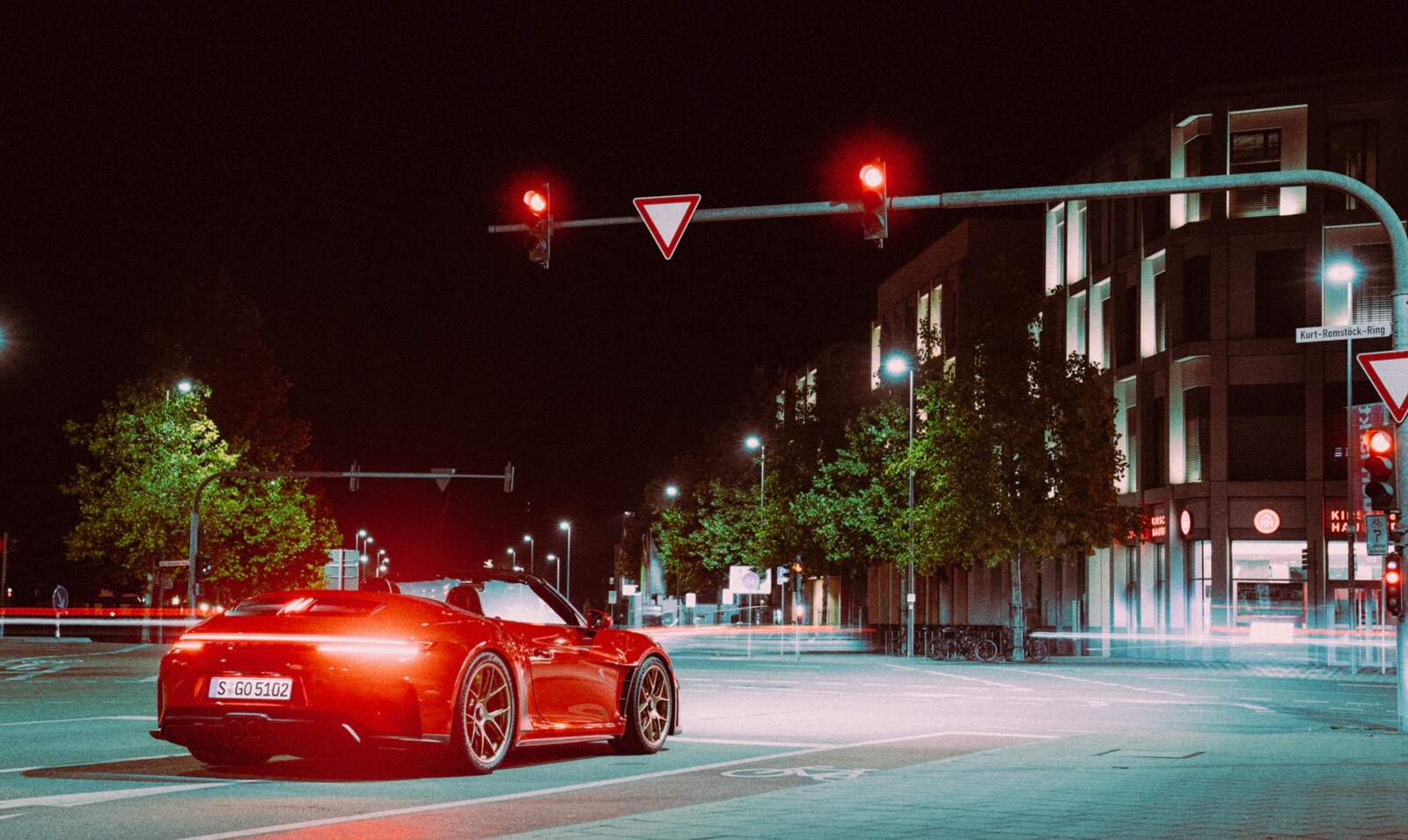
The GT3 S/C and I take to the wide, fast open road. And it really puts us through our paces straight away. Ruts, bumps and an outside temperature of just 13 degrees. The suspension absorbs each impact, holding up well. The Michelins need a few firm presses of the brake pedal before they acclimatise to the heat radiating from the ceramic discs. Did the rear end just drift outwards coming out of the bend? The PSM takes a quick look and lets it carry on. Sport mode, after all.
Then round the left-hander again. The front axle pushes the GT3’s nose into the bend; at the apex, a bump lifts it out slightly – a hard guitar riff between the ruts and the kerb – whilst the rear axle remains stable. Straight into the next right-hander. It’s a big night, one that’s about so much more than just driving, but also about: driving at its very best. What, yes, what more could you want? A roof, perhaps? No idea.
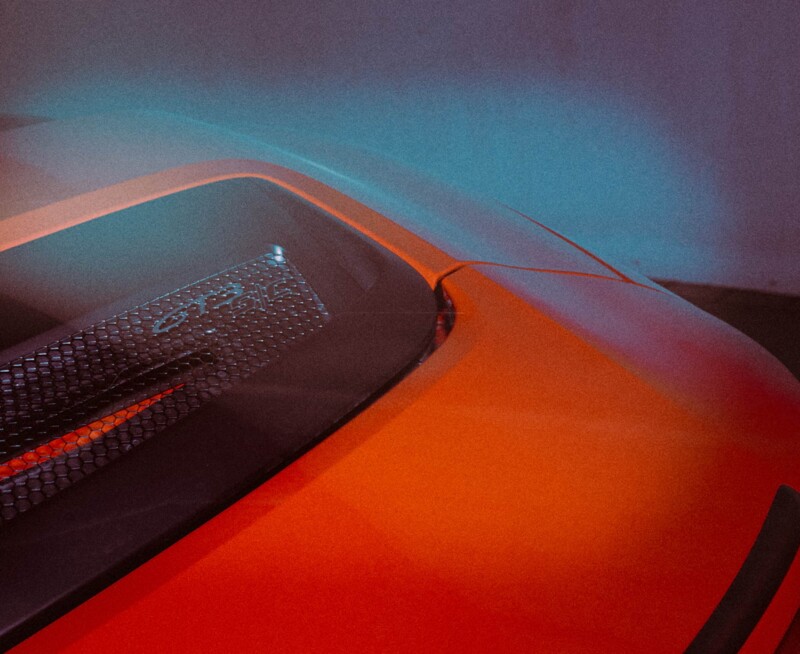
Nothing here is further from the truth than the outrage over the open-top GT3. Behind the front wheel, small and black, is the lettering at the heart of the whole controversy. The motoring press interprets S/C as ‘Sport Cabrio’, which sounds reasonable. Anyone old enough will recognise the 911 SC, built from 1978 to 1983, popularly known as the Super Carrera. It was the 911 of an era when Porsche wanted to phase out the 911. The water-cooled 928 was ready to take its place, and in Zuffenhausen it is still said today that, in 1981, CEO Peter Schutz extended the 911’s lifespan on the product plan in his head of development’s office. With a pen. Without further ado. Intended to be the last of its kind, the SC ended up serving as a bridge model, and within the range comprising the SC and Turbo, it was the affordable 911. Today, those same two letters – separated by a slash – start at 269,000 euros, around 60,000 more than a GT3 Coupé.