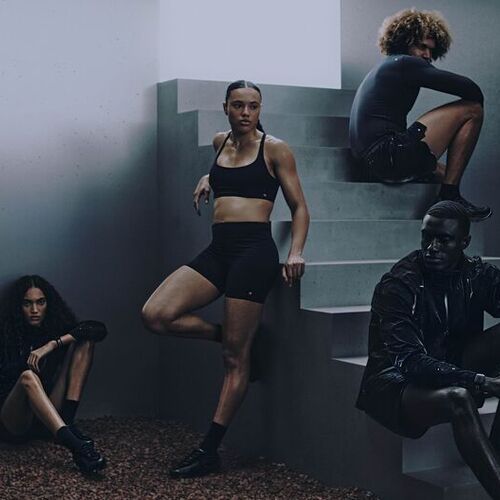
We first need to talk about exactitudes. Exactitudes is the title of a decades-long photographic project by the Dutch artist duo Ari Versluis and Ellie Uyttenbroek. Since the 1990s, Versluis and Uyttenbroek have been photographing people in identical poses against neutral backgrounds and grouping them into cohorts of late-modern society according to specific phenotypical similarities: corporate lawyers, gabbers, fit girls. For example.
The phenomenon that Versluis and Uyttenbroek call “exactitudes” reflects a paradoxical pattern: people who believe that their appearance and demeanor express individuality and nonconformity are easily confused with one another within their own milieu. In other words: all fit girls look more or less the same. Just like all corporate lawyers. People adopt visual codes to signal belonging, and our era is – regrettably – deeply in need of belonging, which is trivially assumed to be the solution to a wide range of identity problems.
Exactitudes is a kind of visual anthropology of identity and self-expression, subcultures and fashion cycles. Clearly, it is nothing new that the declared pursuit of individuality produces visible conformity. Today this is oddly called “living one’s truth”, complete with the involuntary irony that is itself a sign of the times. But essentially, none of this is new. At its core, it is simply the dynamic of fashion as such, which, as the sociologist Georg Simmel recognized more than a hundred years ago, forever oscillates between imitation and differentiation, between the collective and the individual.
Simmel was an unconventional academic thinker, ahead of his time and above all intellectual trends – but of course there are fashions of the mind as well. Visual uniformity is one thing, but it never stops there. There are also the mental templates of the group, thinking in clichés and conventions, already identified by the equally unconventional Hannah Arendt as a form of unthinking thought. And that brings me to Rolex.